Catholic Indulgences: What They Actually Are (and Aren't)
On This Page
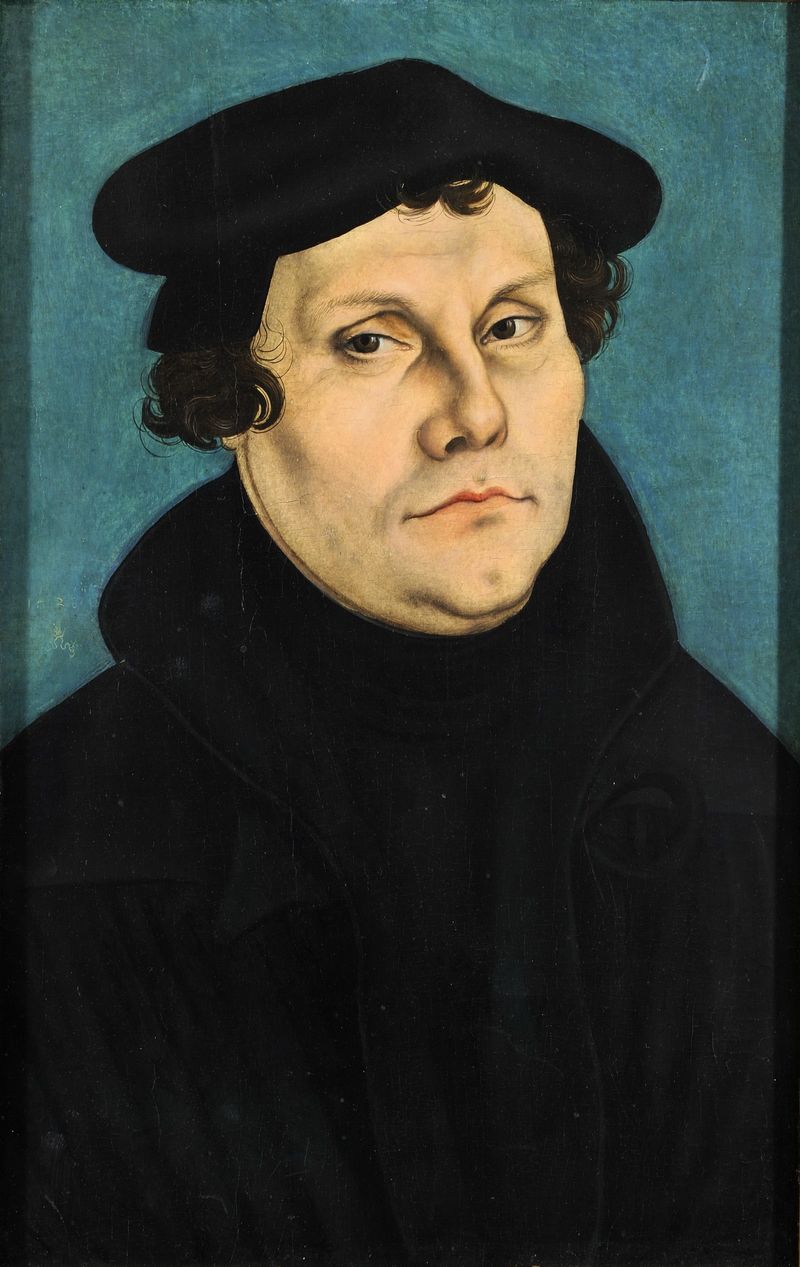
In October 1517 a Dominican friar named Johann Tetzel was wandering the German countryside preaching a papal indulgence to fund the rebuilding of St. Peter’s Basilica. According to the chroniclers who hated him, he told weeping peasants that the moment a coin struck the bottom of his collection box, a soul sprang free from purgatory. No surviving sermon of Tetzel’s contains that exact line—the jingle predates him and may belong to earlier hucksters1—but it captured something real about the abuses of his day. When Martin Luther publicized his Ninety-Five Theses on 31 October 1517—whether by physically nailing them to the door of the Castle Church in Wittenberg (as Philipp Melanchthon later reported) or by enclosing them in the letter he wrote that same day to Archbishop Albert of Mainz, or both—he was not attacking the existence of indulgences. He was attacking a market.
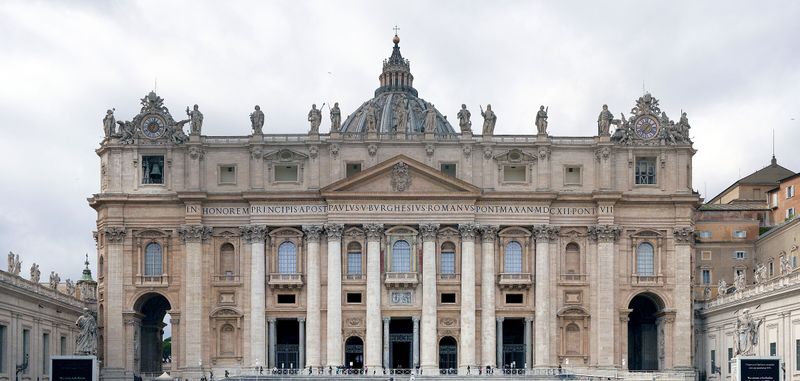
More than five hundred years later, the doctrine still bewilders most Catholics and nearly every Protestant. It has also, quietly, come back into the foreground of ordinary Catholic life: Pope Francis proclaimed 2025 a Jubilee year and opened the Holy Door of St. Peter’s on Christmas Eve 2024; after his death in April 2025, his successor, Pope Leo XIV, sealed it again at Epiphany 2026.2 Millions of pilgrims walked through that doorway with the intention of receiving a plenary indulgence. What, exactly, did they think they were doing? And does the Church still teach what Tetzel was accused of teaching?
This essay takes the question seriously. An indulgence is not what most people believe it is. It is also not nothing. Somewhere between the caricature and the dismissal sits a doctrine that is genuinely ancient and genuinely Catholic—though, in the commercialized form it took in certain late-medieval hands, the practice that grew up around it was in some respects genuinely indefensible, as the Church herself eventually said. The story of how the Church clarified its own teaching in response to Luther is one of the great case studies in how doctrine develops under pressure.
The Short Answer
The Church’s official definition is short and precise. The Catechism of the Catholic Church states:
“An indulgence is a remission before God of the temporal punishment due to sins whose guilt has already been forgiven, which the faithful Christian who is duly disposed gains under certain prescribed conditions through the action of the Church which, as the minister of redemption, dispenses and applies with authority the treasury of the satisfactions of Christ and the saints.”
That is the definition given at Catechism §1471, quoting Pope Paul VI’s 1967 apostolic constitution Indulgentiarum Doctrina.3 It is a dense definition, and for Protestant readers several of its clauses use vocabulary that is not self-interpreting outside the Catholic tradition. Terms like “temporal punishment,” “the treasury of the satisfactions of Christ and the saints,” and “minister of redemption” each carry specific technical weight. Defining the definition—unpacking what each clause actually means—is the only way it lands correctly. Do this carefully and the popular picture of an indulgence collapses.
First, what it is not. An indulgence is not forgiveness of sins. Forgiveness of sins happens in one of two ways in Catholic theology: baptismally, for the sins one brought into the water, and sacramentally through confession for sins committed after baptism. An indulgence presupposes that forgiveness has already happened. It addresses something else.
A note for Protestant readers before we continue: the Catholic understanding is that forgiveness through the sacraments is never apart from faith in Christ or the grace of God. The sacraments are not a separate pipeline of salvation competing with Christ; they are the ordinary means Christ himself chose for applying to particular souls the grace he already won on the cross. As Catholic teaching puts the point, God has bound himself to the sacraments, but he is not bound by them—where the ordinary means cannot reach, grace still reaches.
Second, what it is. It is the remission—the cancellation—of the temporal punishment due to sin. To see what that means, we need a distinction with which Catholic theology has worked since the patristic era.
The Two Consequences of Sin
When you break something that matters, two things are wrong. One is the rupture in the relationship. The other is the damage done. Apologize to your spouse for something you said in anger, and she can forgive you completely; the relationship is restored. But the argument still happened. The words still landed. The emotional mess still needs to be cleaned up. Forgiveness and repair are not the same act.
The Church has long taught that sin works the same way. Grave sin severs the life of grace and incurs “eternal punishment”—which at its core is the definitive loss of communion with God, the state of which hell is the final ratification. When God forgives a sin, this eternal consequence is taken away; the soul is reconciled.
But sin also produces what the Catechism calls “an unhealthy attachment to creatures, which must be purified either here on earth, or after death in the state called Purgatory.”4 That purification is the “temporal punishment” in question. It is not God exacting a fee. It is the truth that a disordered soul cannot simply stride into the unveiled presence of God; it has to be made ready. There are no shortcuts in the sanctification process.
A Scriptural illustration most Protestants will recognize is the aftermath of David’s sin with Bathsheba and against Uriah. When David confesses, Nathan replies, “the LORD has removed your sin; you shall not die” (2 Sam 12:13). The guilt is lifted. Yet Nathan also tells David that the child born of his sin will die (2 Sam 12:14) and that “the sword shall never depart from your house” (2 Sam 12:10). Forgiveness removed the eternal consequence; the temporal consequences of the sin still had to be walked through. The Catholic doctrine of temporal punishment is the same pattern, applied systematically.
“There are no shortcuts in the sanctification process.”
This is where the doctrine of purgatory enters the picture—not as a second chance, but as the final refining of souls already saved. An indulgence addresses exactly this: the residue of sin after reconciliation.
Paul VI put it this way in 1967:
“Therefore it has always been the conviction of the faithful that the paths of evil are fraught with many stumbling blocks and bring adversities, bitterness and harm to those who follow them. […] Every sin in fact causes a perturbation in the universal order established by God in His ineffable wisdom and infinite charity, and the destruction of immense values with respect to the sinner himself and to the human community.”
Only in this framework does an indulgence make sense. It is the Church’s formal declaration that, through her ordinary power as minister of the redemption, she is applying the superabundant satisfaction already won by Christ to a particular soul’s remaining debt of purification.5 As will become clear below, the discipline has always required the recipient’s interior detachment from sin itself—in the plenary case, even from venial sin. An indulgence is not a superstitious formula by which a soul extracts remission from God while still clinging to what she has been forgiven for; it is the application of grace to a soul that has genuinely opened to it.
The Treasury of Merits
The theological heart of the doctrine is what Catholic tradition calls the “treasury” (thesaurus) of merits—and because the language of “merits of the saints” is the single hardest term in this essay for Protestant ears, a careful unpacking is essential before anything else in this section is intelligible.
The starting point is the sufficiency—indeed the superabundance—of Christ’s redemptive act. Christ’s offering on the cross is infinite in its satisfactory value: it does not merely meet the debt of human sin; it floods past it in an inexhaustible surplus. Nothing in Catholic teaching adds to or competes with that. Every grace anywhere in the Body of Christ is itself Christ’s own redemptive work reaching its effects. A Protestant reader who holds the finished work of the cross at the center of the gospel is holding exactly what Catholic doctrine also holds at the center.
“A Protestant reader who holds the finished work of the cross at the center of the gospel is holding exactly what Catholic doctrine also holds at the center.”
What the tradition calls “the merits of the saints” are therefore not a second source of redemption alongside Christ. They are the fruit of Christ’s grace working in his members. This is the same dynamic Paul describes when he says “the love of God has been poured into our hearts through the Holy Spirit” (Rom 5:5), or when he invites believers to “fill up in my flesh what is lacking in Christ’s afflictions for the sake of his body, which is the church” (Col 1:24). The holiness of the saints is real because the Spirit produces it; what is offered from that holiness is itself Christ’s offering, offered back to him through his members. The language of “merit” here is not forensic accounting; it is the recognition that Christ’s grace, having flowed through his Body, is still his, still offered to him, and still available for him to apply.
Paul VI described these merits as “immense, unfathomable, and ever pristine”—language that underscores precisely that their origin and efficacy are entirely in Christ, not in the saints as independent agents.
The Church, as the Body of Christ, has authority over how these graces are applied to her members. This is not the Church setting up a rival dispensation to Christ; it is Christ, working through the ordinary means he chose, applying to specific souls the graces his redemptive act already won. The “power of the keys” in this context goes back to the binding-and-loosing promise Christ made to Peter (Matt 16:19) and to the apostles more broadly (Matt 18:18; John 20:22–23). What the Church “binds” or “looses” in the matter of indulgences is not a new transaction of grace; it is a juridical application of grace already purchased at Calvary.6
The theology of the treasury was systematized in the thirteenth century. Among the earliest formulations was the argument, attributed to the Dominican cardinal Hugh of Saint-Cher around 1230, that the Church had at her disposal a thesaurus composed of the merits of Christ and the saints. The more conventional scholarly credit for the first recognizable technical formalization, however, belongs to the Franciscan Summa Halensis (c. 1236–1245), which speaks of a thesaurus supererogationis perfectorum—a treasury of the supererogatory works of the perfect. The doctrine was then taken up and deepened by Albert the Great and Thomas Aquinas.7
In 1343 Pope Clement VI issued the bull Unigenitus Dei Filius, which gave the treasury doctrine its first solemn papal affirmation and grounded the Jubilee tradition in it. Clement wrote that Christ “acquired a treasury for the Church Militant,” a treasure which, “commended by Christ to the blessed Peter, the key-holder of heaven, and to his successors, his vicars on earth… is to be dispensed mercifully for suitable and reasonable causes.”8
This is what the Catechism has in mind when it speaks of the Church “dispensing with authority the treasury of the satisfactions of Christ and the saints.” It is also the specific claim Luther would later reject in his Ninety-Five Theses. He was not wrong to push on it, or to insist that it be spoken of in ways that do not obscure the sufficiency of Christ. He was wrong, in my view and the Church’s, to abandon it.
From Public Penance to Plenary Indulgences
The practice of indulgences did not appear fully formed. It grew, slowly, out of the early Church’s system of public penance.
In the first centuries of Christianity, grave public sins—apostasy during persecution, adultery, homicide—were reconciled only after long, visible acts of penance: fasts, pilgrimages, exclusion from the Eucharist for months or years. Bishops could, and did, reduce these penances for sufficient reasons. A dying penitent might be reconciled immediately. One who could not perform a pilgrimage might substitute alms. The principle behind these reductions—that the Church has authority over the temporal satisfaction of the forgiven sinner—is exactly what the later doctrine of indulgences inherited.9
The earliest unambiguous plenary indulgence in the Western record is the indulgence Pope Urban II granted at the Council of Clermont on 27 November 1095, the sermon that launched the First Crusade. Canon 2 of that council stated that anyone who, “for devotion alone and not for the gaining of honor or money,” undertook the journey to liberate the Church of God in Jerusalem could count the journey as a substitute for all penance due for sin.10 The theological logic is conservative: the Church is commuting temporal satisfaction. The moral psychology, unfortunately, proved expansive.
The crusading indulgence set a pattern. By the thirteenth century, attaching plenary indulgences to pilgrimages was routine. A famous (and historically contested) example is the Portiuncula Indulgence, traditionally said to have been granted by Pope Honorius III to Francis of Assisi in 1216, remitting all temporal punishment for anyone who visited the little chapel of Our Lady of the Angels. None of the early biographers of Francis—neither Thomas of Celano nor Bonaventure—mentions the Portiuncula Indulgence, and the earliest documentary attestation is a notarial deed from 1277. Historians now regard the late-thirteenth-century expansion as legendary overlay.11
The Jubilee tradition crystallized in 1300 under Boniface VIII, who granted a plenary indulgence to Romans and pilgrims who visited the basilicas of St. Peter and St. Paul during the centenary year. Clement VI shortened the Jubilee interval to fifty years and, in 1350, tied the grant explicitly to the treasury-of-merits theology of Unigenitus. A Holy Door ceremony at St. John Lateran in 1423, for the extraordinary Jubilee of that year, is attested by the Florentine merchant Giovanni Rucellai, whose Zibaldone quaresimale (begun c. 1457) recalled the earlier ceremony. The Holy Door ritual at St. Peter’s, and in its now-canonical four-basilica form, is reliably attested only from Alexander VI’s Christmas Eve opening in 1499, the pattern that still obtains today.12
A decisive and fateful development came in 1476, when Pope Sixtus IV issued the bull Salvator Noster, declaring that a plenary indulgence could be offered for the souls of the faithful departed in purgatory. The bull was initially granted in favor of the church of Saintes in France: those who contributed a specified sum could apply the indulgence to a deceased relative. A year later, Sixtus’s follow-up bull Romani Pontificis provida (27 November 1477) clarified the mechanism canonically, specifying that the application to the dead operated per modum suffragii et deprecationis—by way of intercession and entreaty—on the jurisdictional ground that the Church’s juridical power does not extend over souls beyond this life. Sixtus IV’s extension of indulgences to the dead per modum suffragii is defensible in itself—the communion of saints already held that the living could pray for the dead, and the extension was later reaffirmed by Trent and Paul VI. What Sixtus had not cleanly resolved—and what Luther’s third charge would correctly identify—was the subordinate question of what dispositions the living contributor needed for the suffrage to be efficacious. In practice the reform welded indulgences to almsgiving in a way that would prove catastrophic.13
What “Days” and “Years” Meant on an Indulgence
The most persistent misunderstanding of the pre-1967 discipline, and one that still colors popular impressions, concerns the curious numerical values once attached to indulgenced prayers and devotions. A printed prayer card of earlier generations might announce “three hundred days’ indulgence” or “seven years’ indulgence.” Many who read such a card assumed the phrase meant three hundred days off an otherwise-required stint in purgatory, or seven years shaved off their personal sentence there. The Church never taught that as doctrine—though the numerical language, inherited from an older penitential discipline, admitted of a purgatorial reading that the magisterium tolerated for centuries before finally reforming it.
The numerical values arose by analogy with the penitential discipline of the ancient and early medieval Church. When a grave sinner was reconciled after a grave fault, the bishop imposed a specified period of canonical penance—fasts, abstentions, sackcloth, prostration at the church doors, exclusion from the Eucharist until reconciliation by the bishop—often measured in days or in years, depending on the gravity of the fault. The remission of such penance for sufficient cause was the original shape of an indulgence. By the early medieval period the Celtic and Anglo-Saxon tariff-penitentials (Cummean, Theodore of Tarsus, Halitgar) had further granulated the scheme into specific day- and week-counts for specific faults, with commutations permitted: prayers, psalms, pilgrimages, or alms could substitute for days of fasting. The first indulgence proper, in the strict sense, appears in the late eleventh century, most famously at Urban II’s Clermont in 1095. From there the practice standardized: specific devotional acts were assigned particular values, so that a prayer or pilgrimage “of forty days” meant the act remitted the equivalent of forty days of ancient canonical penance. The number named a juridical reduction of penance owed in this life, not a unit of time in the afterlife.
Two things made this system confusing in practice. First, by the later medieval period the rigorous public-penance regime of antiquity had largely given way to private auricular confession (universalized for the laity by Lateran IV’s Omnis utriusque sexus in 1215), even as vestiges of public-penance rites persisted in certain regions and for certain notorious crimes. The “days” and “years” had become symbolic references to a discipline most parishioners no longer lived under. The symbols floated free of the reality they had originally named. Second, because partial indulgences could also be applied to souls in purgatory—by way of intercession, not by calendar quantities, and on the jurisdictional ground that the Church has no direct power over souls beyond this life—the symbolic units could easily be misread as units of time in purgatory. A small but notorious set of preachers (Tetzel and Albert of Brandenburg’s Instructio Summaria are the canonical examples) traded on that confusion, and the Church itself repeatedly corrected the related a culpa et a poena abuse from within. The mainstream of careful scholastic and canonical teaching, however—from Aquinas and Bonaventure through John of Dambach’s De quantitate indulgentiarum (c. 1363) and the Sorbonne’s condemnation of related abuses in 1482—consistently distinguished what the numerical language formally meant from what popular rhetoric occasionally suggested.
The Church’s official teaching, as distinct from popular devotional practice, consistently held the narrower position: indulgences remit temporal punishment, and their juridical measurement does not correspond to any calendar applicable to purgatory, which is not a location with a clock. But the ambiguity of the terminology remained pastorally troublesome, and Pope Paul VI’s 1967 Indulgentiarum Doctrina ended it. Norm 4 reads: “A partial indulgence will henceforth be designated only with the words ‘partial indulgence’ without any determination of days or years.” Chapter V, §12 explains the substitute principle: “with the abolishment of the former determination of days and years, a new norm or measurement has been established which takes into consideration the action itself of the faithful Christian who performs a work to which an indulgence is attached.” Norm 5 completes the principle with what commentators call the “doubling rule”: the faithful obtain, by the action itself, the remission of temporal punishment intrinsic to it—and, through the Church’s ministerial intervention, an equal remission in addition. The measure is interior, proportional to the charity and perfection with which the act is performed, and the Church matches what the soul has already done.
Indulgentiarum Doctrina itself frames the change in positive theological terms, not primarily as a correction of popular confusion: the new measure grounds indulgences in the action of the faithful and gives the practice, as Paul VI argued, greater dignity and esteem. Commentators regularly add the pastoral observation that the reform also removed a long-standing source of misleading arithmetic, and that observation is fair. There is no sentence in purgatory being shortened by named units. There is only purification, and the Church’s role in applying grace from the treasury to the soul being purified. The 1967 reform went well beyond the days-and-years abolition: it also limited plenary indulgences to one per day, required interior detachment from even venial sin for the plenary case, and eliminated older categorical distinctions that had multiplied over the centuries. The old calendar-style vocabulary was only the most conspicuous piece of what the reform corrected.
Luther Was Right to Protest Certain Abuses

By the early sixteenth century, plenary indulgences were being preached as transferable instruments of deliverance for souls in purgatory, often in campaigns organized to finance large construction projects. The most notorious of these was the 1517 campaign for the new St. Peter’s Basilica in Rome, under the preaching of Johann Tetzel on behalf of Albert of Brandenburg—who had borrowed heavily from the Fugger bank to purchase the archbishopric of Mainz and needed to repay it.14
Tetzel himself may have been more careful than his critics allowed. The famous jingle Luther attributed to him—in its dominant German form, Sobald das Geld im Kasten klingt, die Seele aus dem Fegefeuer springt, “as soon as the money in the box rings, the soul from purgatory springs”—appears nowhere in his surviving sermons and postdates his preaching when we can find it in print. Complaints about similar abuses were already in the air: the Sorbonne faculty of theology at the University of Paris censured analogous preaching in 1482, when Tetzel (born around 1465) was still a teenager matriculating at Leipzig.15 But the Instructio Summaria issued by Albert of Brandenburg for the 1517 campaign—under which Tetzel preached—promised pardons for the dead in exchange for monetary contributions, without requiring the contributor himself to confess or communicate. The paradox is that Tetzel could be at once more theologically careful than the jingle suggests and the salesman of a product whose structure—payment without the contributor’s own sacramental reception—was doctrinally defective. It was a product for sale.
Luther’s Ninety-Five Theses are best read not as a program of Protestant dogmatics but as a pastoral protest. They are searching, often contradictory, and more Catholic in substance than their legend suggests. Thesis 1 states: “Our Lord and Master Jesus Christ, when He said Poenitentiam agite [Repent], willed that the whole life of believers should be repentance.” Thesis 36 declares: “Every truly repentant Christian has a right to full remission of penalty and guilt, even without letters of pardon.” Thesis 86, the most corrosive of them all, asks: “Why does not the pope, whose wealth is to-day greater than the riches of the richest, build just this one church of St. Peter with his own money, rather than with the money of poor believers?” Read in context with Theses 5–6 and 20–21—which limit papal remission to the Church’s own canonical penalties—Thesis 36 reads as a Catholic point: the truly contrite soul does not strictly need an indulgence letter, because what such a letter would remit is the canonical penance that genuine contrition has already addressed. Taken as a freestanding claim that perfect contrition by itself remits all temporal punishment, however, Thesis 36 sits in tension with what Trent would later clarify.16
The substance of Luther’s objection was threefold. First, money was being extracted from the poor for the benefit of the rich. Second, the preachers were giving the impression that one could purchase spiritual goods without interior conversion. Third, the extension of indulgences to souls in purgatory, without requiring the contributor’s own repentance, appeared to sever the indulgence from the sacramental life entirely. On the first two points Luther was simply correct. On the third he was pointing to a theological ambiguity Sixtus IV had never cleanly resolved.
Trent and the Reform

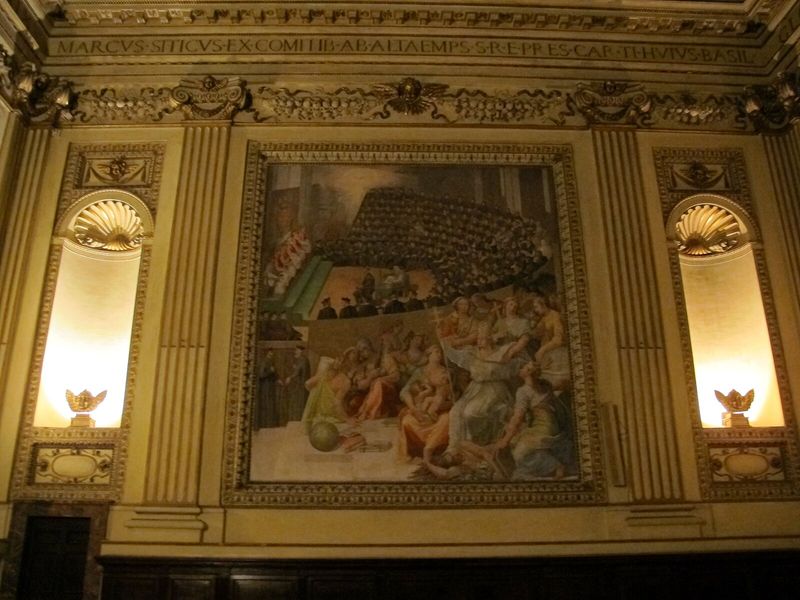
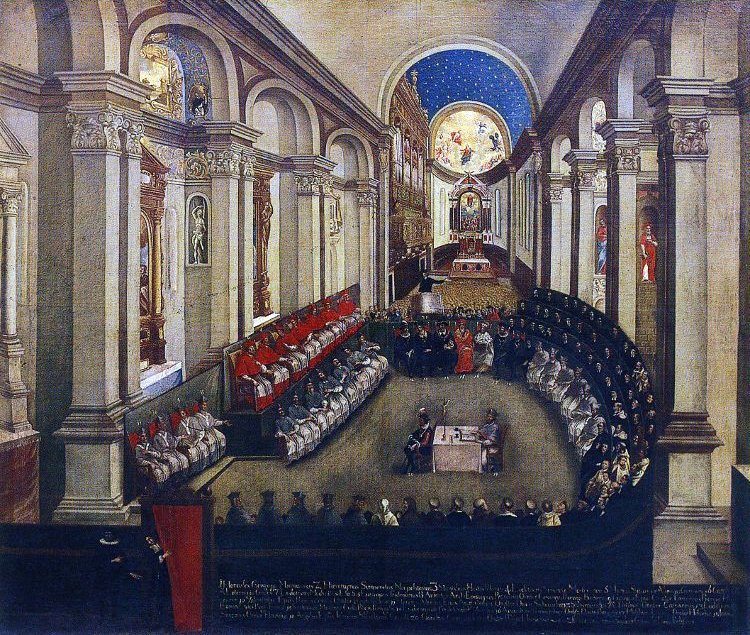
The Catholic response was slower than it should have been, but it came. On 16 July 1562, at the height of its reformatory work, the Council of Trent issued its Session 21 Decree Concerning Reform, whose ninth chapter suppressed the office of the quaestor—the professional indulgence-preacher whose livelihood depended on collections—and transferred the authority to announce indulgences directly to bishops.17 A little over a year later, at its twenty-fifth and final session (3–4 December 1563), Trent issued a short but weighty Decretum de Indulgentiis that remains the indispensable magisterial text on the question. It is worth quoting at length, because its tone is the tone of a Church correcting itself:
“Since the power of granting indulgences was conferred by Christ on the Church, and she has even in the earliest times made use of that power divinely given to her, the holy council teaches and commands that the use of indulgences, most salutary to the Christian people and approved by the authority of the holy councils, is to be retained in the Church, and it condemns with anathema those who assert that they are useless or deny that there is in the Church the power of granting them. In granting them, however, it desires that in accordance with the ancient and approved custom in the Church moderation be observed, lest by too great facility ecclesiastical discipline be weakened. But desiring that the abuses which have become connected with them, and by reason of which this excellent name of indulgences is blasphemed by the heretics, be amended and corrected it ordains in a general way by the present decree that all evil traffic in them, which has been a most prolific source of abuses among the Christian people, be absolutely abolished.”
The operative clause is omnes pravos quaestus pro his consequendis… omnino abolendos esse—rendered by Schroeder as “all evil traffic in them… be absolutely abolished.” Trent did not merely say monetary indulgences were unseemly; it ordered them ended.18
Four years later, Pope Pius V gave the decree teeth. In 1567 he revoked all existing grants of indulgences that involved any payment or other financial transaction, and forbade attaching the receipt of an indulgence to any financial act—including almsgiving. From that point forward it has been impossible, as a matter of canon law, to purchase a Catholic indulgence.19
Five hundred years of Catholic catechesis on indulgences now begin from that reform, not from the abuses that provoked it. This is worth saying plainly: when a contemporary Catholic reads the Catechism on indulgences, she is reading a doctrine that has already been pruned by its own sharpest reformers, not a doctrine she has to defend in the form Tetzel peddled it.
Paul VI’s Modern Framework
The next major revision came under Paul VI in 1967, during the post-conciliar renewal. His apostolic constitution Indulgentiarum Doctrina is the current magisterial benchmark; the 1983 Code of Canon Law (canons 992–997) codifies its discipline, and the Enchiridion Indulgentiarum (most recently republished in 1999) lists the specific works to which partial and plenary indulgences are attached.20
Paul VI did three important things. First, he formally abolished the old days-and-years calculus explained above. Partial indulgences are now measured only by the equivalence between the act performed and its own intrinsic satisfactory value—no more mental math about how many “days” a given prayer buys.
Second, he clarified that a single sacramental confession suffices for gaining multiple plenary indulgences, but that Eucharistic Communion and prayer for the Supreme Pontiff’s intentions must be performed for each plenary indulgence separately. Third, he reiterated in unambiguous terms that “to acquire a plenary indulgence it is necessary to perform the work to which the indulgence is attached and to fulfill three conditions: sacramental confession, Eucharistic Communion and prayer for the intentions of the Supreme Pontiff. It is further required that all attachment to sin, even to venial sin, be absent.”21
Read that last phrase carefully. Total detachment from sin, even venial sin, is a state the great spiritual writers regarded as a high attainment. If it is missing, the indulgence is partial rather than plenary. Paul VI’s reform, far from loosening the requirements, tied the plenary indulgence to something that is in fact very difficult to achieve. There is no modern indulgence one can just walk in and receive.
The 1983 Code of Canon Law states the whole doctrine with forensic concision. Canon 992 defines the indulgence (in language drawn directly from Indulgentiarum Doctrina); canon 993 distinguishes partial from plenary; canon 994 permits any member of the faithful to gain partial or plenary indulgences for himself or herself, or to apply them to the dead by way of suffrage; canon 995 reserves to the supreme authority of the Church the power to grant indulgences and confines others to what has been granted or expressly conceded to them; canon 996 §1 specifies that “to be capable of gaining indulgences, a person must be baptized, not excommunicated, and in the state of grace at least at the end of the prescribed works”; canon 997 refers to the particular norms that flesh out the discipline.22
If a practice sold in 1517 was in obvious tension with this framework, the framework is now the one that governs. Tetzel would fail every one of these canonical tests.
The 2025 Jubilee: What Just Ended
Since 1475 the Church has observed the ordinary Jubilee on a twenty-five-year cycle, though the rhythm has not been wholly unbroken.
The Jubilee of 1800 was never proclaimed: Pius VI had died in French captivity in August 1799, and the difficulties of the Napoleonic period—the loss of the Papal States and Pius VII’s prudential judgment after his election—meant that no Bull of Indiction was ever issued for that year. The ordinary Jubilee of 1850 was likewise omitted: Pius IX was in exile from the Roman Republic (at Gaeta from November 1848 and then at Portici from September 1849 until his return to Rome in April 1850), and in his 1874 apostolic letter Gravibus Ecclesiae Periculis he acknowledged that “because of the grievous conditions of the times, We had to omit the solemnity of the Jubilee in 1850.” In 1851 he extended an extraordinary Jubilee indulgence to the universal Church.
And though Pius IX formally proclaimed the Jubilee of 1875 in Gravibus Ecclesiae Periculis (24 December 1874), no Holy Door ceremony was held because the Kingdom of Italy had annexed Rome in 1870. The regular ritual opening and closing of the Holy Doors did not resume until Leo XIII opened the Holy Door on Christmas Eve 1899 for the Jubilee of 1900. Extraordinary Jubilees, meanwhile, have been called on various occasions throughout the period.
Pope Francis proclaimed the Ordinary Jubilee of 2025 in the bull Spes Non Confundit (“Hope Does Not Disappoint,” after Romans 5:5), promulgated on 9 May 2024. He opened the Holy Door of St. Peter’s on Christmas Eve 2024. Francis died on 21 April 2025, before the Jubilee concluded; his successor, Pope Leo XIV—elected on 8 May 2025—closed the Holy Door of St. Peter’s on the Feast of the Epiphany, 6 January 2026. The Holy Doors at the three other Roman papal basilicas were closed on a staggered schedule that preceded St. Peter’s: St. Mary Major on 25 December 2025, St. John Lateran on 27 December 2025, and St. Paul Outside the Walls on 28 December 2025.23

The 2025 Jubilee attached a plenary indulgence to a well-defined set of acts: pilgrimage through any of the four Roman Holy Doors; pilgrimage to a designated Jubilee church in one’s own diocese; and—significantly for the housebound and the sick—a substituted work of prayer and charity united to the suffering of the Church, for those unable to travel. In every case the ordinary conditions of Indulgentiarum Doctrina applied: sacramental confession, Eucharistic Communion, prayer for the pope’s intentions, interior detachment from all sin.24
The Jubilee is now, at the time of this writing, a little over three months closed. Whatever one thinks of the theology of indulgences, the spectacle of millions of people walking through a bronze door with interior contrition and the intention of applying the grace received to a deceased grandparent is not a dark or greedy thing. It is something closer to a liturgical act of solidarity.
How to Gain a Plenary Indulgence Today

The mechanics are simpler than most people realize. To gain a plenary indulgence, a Catholic in the state of grace must:
- Perform the indulgenced work. The Enchiridion Indulgentiarum lists these; common examples include a half-hour of Scripture reading, a half-hour of Eucharistic adoration, the devout recitation of the Rosary in a church or with family, the Stations of the Cross, or the visitation of a church on its patronal feast. Jubilee years and special feasts can attach additional plenary indulgences to specific pilgrimages.25
- Go to sacramental confession. One confession within a reasonable window (typically understood as about twenty days before or after the indulgenced work) suffices for multiple plenary indulgences.
- Receive the Eucharist. Communion must be received within the same window and must be repeated for each separate plenary indulgence sought.
- Pray for the intentions of the Supreme Pontiff. Paul VI’s Indulgentiarum Doctrina Norm 10 specifies the minimum as one Our Father and one Hail Mary, though many Catholics traditionally add a Glory Be; any prayer offered for the pope’s intentions (not for the pope, but for what the pope prays for) suffices.
- Be detached from all sin, even venial. This is the subjective condition that, as Paul VI specified, turns the indulgence from partial to plenary. If it is missing, the indulgence is still partial.26
A Catholic may apply the indulgence to herself or, by way of intercession, to a deceased person. She may not apply it to another living person—this is an important restriction that distinguishes the current discipline from the late-medieval abuse.
Five Lingering Misconceptions
“An indulgence forgives sin.” It does not. All forgiveness of sin comes from Jesus Christ; the Church is the minister through whom he ordinarily applies it. Forgiveness is applied through baptism (for sins brought into the water), through sacramental absolution (for sins committed after baptism), and through acts of perfect contrition—contrition motivated by the love of God above all else. Perfect contrition remits venial sins outright; per Catechism §1452, it “also obtains forgiveness of mortal sins if it includes the firm resolution to have recourse to sacramental confession as soon as possible.” An indulgence presupposes that forgiveness has already occurred and addresses the remaining purification.
“You can buy an indulgence.” Not since Pius V’s reform of 1567. Giving to the poor or to a worthy cause has always been a good and meritorious work in Catholic teaching, and almsgiving remains one of the ordinary categories of acts that can carry a partial indulgence under the Manual of Indulgences. What the Church removed in 1567, chastened by the commercial abuses of the late medieval period, was the direct connection between a specific monetary payment and a specific indulgence. Giving alms because they are good remains good; giving alms in order to purchase an indulgence is a transaction the Church no longer permits. Any priest or preacher attaching money to an indulgence today is acting against canon law. If you are ever offered an indulgence for a cash payment, something fraudulent is happening.
“An indulgence is a ticket out of hell.” It is not, and cannot be. A person in mortal sin cannot gain an indulgence at all; canon 996 §1 requires being “in the state of grace at least at the end of the prescribed works.” The whole doctrine presupposes that hell is already not in view.
“Purgatory and indulgences are medieval inventions.” The theology of the treasury was systematized in the Middle Ages, and the practice of plenary indulgences dates from Clermont in 1095. But the underlying distinction between forgiveness of guilt and purification of the soul is present in the New Testament (1 Cor 3:12–15 is the locus classicus), the Fathers, and the earliest penitential discipline of the Church.27
“The Catholic Church has never admitted the practice was abused.” It has, repeatedly and explicitly. The decrees of the Council of Trent, the disciplinary reforms of Pius V, and the sober introductory sections of Paul VI’s Indulgentiarum Doctrina are all acts of self-correction. The Church did not defend Tetzel; it abolished Tetzel’s office.
“The Church did not defend Tetzel; it abolished Tetzel’s office.”
Why This Doctrine Still Matters
The most common criticism of indulgences, even today, is not that they are corrupt but that they are spiritually strange. Why would a forgiven person still need purification? Why would there be debts of satisfaction after the debt of guilt has been cancelled?
The answer, in the end, is not procedural but anthropological. It is a feature of the Catholic account of the human person that salvation is not a legal fiction but an actual healing. The God who forgives sin is the same God who, in his mercy, refuses to leave the sinner the way she was. The purification is primarily therapeutic in its ultimate purpose, even where it retains a satisfactory dimension. It is what the Eastern tradition calls theosis and the Latin tradition has often called sanctification. A soul cannot see God and be happy without first becoming able to bear what it sees.
“A soul cannot see God and be happy without first becoming able to bear what it sees.”
Within that framework, the doctrine of indulgences takes on a humble but real shape. The Church is not issuing spiritual currency. She is acknowledging that Christ’s redemption of the Body of Christ is not a private transaction between individuals and God but something offered through a communion. When a widow prays the Rosary for her husband of fifty years and asks the Church to apply the satisfactions of Christ and the saints to his ongoing purification, she is doing something that the Church has held for nearly a thousand years is not only permissible but beautiful. That act is not purchased. It is not transferable for profit. It is not a magic trick. It is a gift offered in one hand and received in the other, with Christ’s cross at the center of the exchange.
It is, as Luther so nearly saw, a Catholic act. And it is still, five hundred years after a Dominican friar went into the German countryside with a collection box, what the Church actually teaches.
Frequently Asked Questions
What is an indulgence in one sentence? An indulgence is the Church’s formal remission of the temporal punishment still owed for sins whose guilt has already been forgiven, drawn from the treasury of the merits of Christ and the saints.
Can Catholics still buy indulgences today? No. Pope Pius V abolished monetary indulgences in 1567, and the current Code of Canon Law (canons 992–997) requires that indulgences be gained through prescribed spiritual works, never through payment.
Is the sale of indulgences what Martin Luther was protesting? Yes, primarily. Luther’s Ninety-Five Theses (1517) targeted the 1517 campaign for St. Peter’s Basilica, in which the preacher Johann Tetzel was offering indulgences in exchange for contributions. Luther also pushed deeper into the theology of the treasury; he eventually rejected that doctrine too. The Council of Trent responded by abolishing the commercial abuses Luther named while defending the underlying doctrine.
Do I need to be in the state of grace to gain an indulgence? Yes. Canon 996 §1 of the 1983 Code of Canon Law requires that “to be capable of gaining indulgences, a person must be baptized, not excommunicated, and in the state of grace at least at the end of the prescribed works.”
What are the conditions for a plenary indulgence? Performance of the indulgenced work, sacramental confession, reception of the Eucharist, prayer for the intentions of the Supreme Pontiff, and complete interior detachment from all sin (including venial sin). If the detachment is incomplete, the indulgence becomes partial.
Can an indulgence be applied to someone who has died? Yes, by way of intercession (per modum suffragii), per canon 994. It cannot be applied to another living person.
What was special about the 2025 Jubilee? Pope Francis proclaimed an Ordinary Jubilee of Hope and opened the Holy Door of St. Peter’s on 24 December 2024. Following Francis’s death in April 2025, his successor Pope Leo XIV closed the Holy Door of St. Peter’s on 6 January 2026; the Holy Doors at the other three Roman papal basilicas were closed on a staggered schedule earlier (St. Mary Major 25 December 2025; St. John Lateran 27 December 2025; St. Paul Outside the Walls 28 December 2025). The Jubilee attached a plenary indulgence to pilgrimage through the four Roman Holy Doors and to designated Jubilee churches worldwide, with accommodations for the sick and housebound.
Is the doctrine of purgatory required to make sense of indulgences? Yes. The temporal-punishment distinction on which indulgences depend is the same distinction that underlies the doctrine of purgatory.
Footnotes
1. The earliest documented complaints of jingle-style indulgence preaching in the Sorbonne's territory date to 1482, roughly a generation before Tetzel's 1517 campaign. The specific couplet attributed to Tetzel by Luther is transmitted in two closely related forms: the dominant “Sobald das Geld im Kasten klingt, die Seele aus dem Fegefeuer springt” and the secondary “Sobald der Pfennig im Kasten klingt…” Neither appears in Tetzel's surviving printed sermons or in the Instructio Summaria of Albert of Brandenburg. See Hartmut Kühne in H. Kühne, E. Bünz, and P. Wiegand, eds., Johann Tetzel und der Ablass (Berlin: Lukas Verlag, 2017); and Richard Rex, The Making of Martin Luther (Princeton: Princeton University Press, 2017), 84–87.
2. Francis, Spes Non Confundit, Bull of Indiction of the Ordinary Jubilee of the Year 2025 (9 May 2024), §§6, 23. See the Spes Non Confundit text on vatican.va. The Holy Door schedule is drawn from the Vatican's official Jubilee calendar.
3. Catechism of the Catholic Church, 2nd ed. (Washington, DC: USCCB, 2000), §1471, quoting Paul VI, Indulgentiarum Doctrina (1 January 1967), Norm 1. See the Indulgentiarum Doctrina text on vatican.va.
4. Catechism, §1472; cf. §§1030–1032 (purgatory).
5. Paul VI, Indulgentiarum Doctrina §2. The apostolic constitution's introductory chapters offer the clearest modern exposition of the theology of temporal punishment. The quoted passage is from §2 of the doctrinal preamble, not the Norms.
6. Catechism §§1476–1477; Paul VI, Indulgentiarum Doctrina §5; Thomas Aquinas, Summa Theologiae Suppl. q. 25, a. 1; Clement VI, Unigenitus Dei Filius (27 January 1343), in Denzinger-Hünermann §§1025–1027, which gives the treasury doctrine its first solemn papal affirmation. For a broader historical and theological exposition, see Robert W. Shaffern, The Penitents' Treasury: Indulgences in Latin Christendom, 1175–1375 (Scranton: University of Scranton Press, 2007), chaps. 3–5.
7. On Hugh of Saint-Cher's contribution, see Robert W. Shaffern, The Penitents' Treasury: Indulgences in Latin Christendom, 1175–1375 (Scranton: University of Scranton Press, 2007), ch. 3. The more technical formalization of the doctrine, including the phrase thesaurus supererogationis perfectorum, appears in the Franciscan Summa Halensis (c. 1236–1245), attributed to the circle of Alexander of Hales: see Summa Fratris Alexandri, Pars IV, Q. 23, a. 1, m. 1 (Venice, 1575); for Books I–III, see the Quaracchi critical edition (Ad Claras Aquas: Collegium S. Bonaventurae, 1924–1948). See also Lydia Schumacher, ed., The Summa Halensis: Sources and Context (Berlin: De Gruyter, 2020). Thomas Aquinas treats the treasury at Summa Theologiae Suppl. q. 25, aa. 1–3, drawing on the earlier Dominican and Franciscan traditions.
8. Clement VI, Unigenitus Dei Filius (27 January 1343), in Heinrich Denzinger, Enchiridion Symbolorum, Definitionum et Declarationum de Rebus Fidei et Morum, 43rd ed., eds. Peter Hünermann and Robert Fastiggi (San Francisco: Ignatius Press, 2012), §§1025–1027. The bull was promulgated to designate the Jubilee of 1350 and to give formal doctrinal weight to the treasury teaching.
9. On the patristic penitential system and its relation to later indulgences, see Cyrille Vogel, Le pécheur et la pénitence dans l'Église ancienne (Paris: Cerf, 1966), and its medieval companion Vogel, Le pécheur et la pénitence au moyen âge (Paris: Cerf, 1969). For the transitional period in magisterial detail, see Nikolaus Paulus, Geschichte des Ablasses im Mittelalter, 3 vols. (Paderborn: Schöningh, 1922–1923), vol. 1.
10. The canons of the Council of Clermont (18–28 November 1095; the First Crusade was proclaimed in the sermon of 27 November 1095) are preserved in Robert Somerville, The Councils of Urban II, Volume 1: Decreta Claromontensia, Annuarium Historiae Conciliorum Supplementum 1 (Amsterdam: Hakkert, 1972), 74. See also Jonathan Riley-Smith, The First Crusade and the Idea of Crusading, 2nd ed. (Philadelphia: University of Pennsylvania Press, 2009), 27–30.
11. The earliest documentary attestation of the Portiuncula Indulgence is a notarial deed of 31 October 1277. Neither Thomas of Celano's Vita Prima (1228/1229) nor Bonaventure's Legenda Maior (1263) mentions it. For the critical history see Michael Robson, The Franciscans in the Middle Ages (Woodbridge: Boydell, 2006), 94–97, and Augustine Thompson, Francis of Assisi: A New Biography (Ithaca: Cornell University Press, 2012), 155–57.
12. The 1423 reference is preserved in the Florentine merchant Giovanni Rucellai's Zibaldone quaresimale (begun c. 1457); see Alessandro Perosa, ed., Giovanni Rucellai ed il suo Zibaldone, Studies of the Warburg Institute 24 (London: Warburg Institute, 1960), vol. 1. The Holy Door ritual at St. Peter's, in the form of the now-canonical four-basilica rite, is reliably attested only from Alexander VI's Christmas Eve opening in 1499 for the Jubilee of 1500 (bull Inter curas multiplices, 20 December 1499; Johann Burchard's Liber notarum records the ceremony); earlier pre-1499 evidence for Lateran Holy Door observance (Pero Tafur c. 1437; Rucellai on 1423; William Wey; the Sixtus IV–era jubilee medals of 1475) is surveyed in Herbert Thurston, SJ, The Holy Year of Jubilee: An Account of the History and Ceremonial of the Roman Jubilee (London: Sands, 1900), chaps. II and VI.
13. Sixtus IV, Salvator Noster (3 August 1476); and his follow-up Romani Pontificis provida (27 November 1477), which canonized the per modum suffragii et deprecationis framing (Denzinger-Hünermann §§1405–1407). The Latin text of Salvator Noster is in Bullarum, Diplomatum et Privilegiorum Sanctorum Romanorum Pontificum Taurinensis Editio, vol. 5 (Turin: Seb. Franco, 1860), 260–61. For theological analysis see Robert W. Shaffern, “Learned Discussions of Indulgences for the Dead in the Middle Ages,” Church History 61, no. 4 (1992): 367–81.
14. On the Fugger loan and the financial architecture of the 1517 campaign, see Lyndal Roper, Martin Luther: Renegade and Prophet (New York: Random House, 2017), 73–82; and Diarmaid MacCulloch, The Reformation: A History (New York: Viking, 2003), 123–27.
15. Rex, Making of Martin Luther, 85–87. Tetzel's birth is commonly dated c. 1465 at Pirna, with his matriculation at the University of Leipzig recorded in 1482–83; see Hartmut Kühne, in H. Kühne, E. Bünz, and P. Wiegand, eds., Johann Tetzel und der Ablass (Berlin: Lukas Verlag, 2017); Enno Bünz, “Tetzel, Johann,” in Neue Deutsche Biographie 26 (Berlin: Duncker & Humblot, 2016). For the earlier Parisian complaints by the Sorbonne faculty of theology, see Ludwig von Pastor, The History of the Popes, trans. R. F. Kerr, vol. 7 (St. Louis: B. Herder, 1908), 347–48. The text of the Instructio Summaria issued by Albert of Brandenburg (under whom Tetzel preached) is in Walter Köhler, Dokumente zum Ablassstreit von 1517, 2nd ed. (Tübingen: Mohr, 1934), 104–124.
16. Luther, Disputatio pro Declaratione Virtutis Indulgentiarum (31 October 1517), theses 1, 36, and 86. English translation from Works of Martin Luther, with Introductions and Notes, trans. Henry Eyster Jacobs and Adolph Spaeth, vol. 1 (Philadelphia: A. J. Holman, 1915), 29–38. Cf. the updated translation by C. M. Jacobs in Luther's Works, vol. 31: Career of the Reformer I, ed. Harold J. Grimm (Philadelphia: Fortress, 1957), 25–33. The Latin text is in D. Martin Luthers Werke, Weimar edition (Weimar: Böhlau, 1883–1929), 1:233–38.
17. Council of Trent, Session 21 (16 July 1562), Decree Concerning Reform (Decretum super reformatione), chap. 9, abolishing the office of the quaestor. See The Canons and Decrees of the Council of Trent, trans. H. J. Schroeder (Rockford, IL: TAN, 1978), 139–40. The distinct and more famous Decretum de Indulgentiis belongs to Session 25, not Session 21.
18. Council of Trent, Session 25 (3–4 December 1563), Decretum de Indulgentiis, in Schroeder, Canons and Decrees, 253–54. The Latin text is in Concilium Tridentinum: Diariorum, Actorum, Epistularum, Tractatuum Nova Collectio, ed. Societas Goerresiana (Freiburg: Herder, 1901–), 9:1077–78.
19. On Pius V's 1567 prohibition of indulgences tied to any financial act, including almsgiving, see Nikolaus Paulus, Indulgences as a Social Factor in the Middle Ages, trans. J. Elliot Ross (New York: Devin-Adair, 1922); the sustained German treatment in Paulus, Geschichte des Ablasses im Mittelalter, vol. 3: Geschichte des Ablasses am Ausgange des Mittelalters (Paderborn: Schöningh, 1923); and the summary in W. H. Kent, “Indulgences,” in The Catholic Encyclopedia, vol. 7 (New York: Robert Appleton Company, 1910), newadvent.org. The reform forms part of the broader disciplinary enforcement of Trent's Decretum de Indulgentiis.
20. The 1999 Manual of Indulgences: Norms and Grants, English translation of the Enchiridion Indulgentiarum, 4th ed. (Washington, DC: USCCB, 2006), remains the standard reference for which acts carry indulgences and on what conditions.
21. Paul VI, Indulgentiarum Doctrina, Norm 7. The text on multiple plenary indulgences is Norm 9.
22. Code of Canon Law (1983), canons 992–997. See the official English text of canons 959–997 on vatican.va.
23. Francis, Spes Non Confundit (9 May 2024); Vatican Dicastery for Evangelization, Jubilee 2025 official calendar. The staggered closing schedule for the four Roman Holy Doors was: St. Mary Major on 25 December 2025 (presided by Cardinal Rolandas Makrickas); St. John Lateran on 27 December 2025 (Cardinal Baldassare Reina); St. Paul Outside the Walls on 28 December 2025 (Cardinal James Michael Harvey); and St. Peter's on 6 January 2026 (Pope Leo XIV). See the Dicastery's communiqué “Dates and Times of the Closing of the Holy Doors” and the official post-event bulletins on iubilaeum2025.va.
24. Apostolic Penitentiary, Decree on the Granting of the Indulgence during the Ordinary Jubilee Year 2025 (13 May 2024), §§1–4. The decree specifies the pilgrimage routes, the designated jubilee churches, and the provisions for those unable to travel.
25. Manual of Indulgences: Norms and Grants, English translation of the Enchiridion Indulgentiarum, 4th ed. (Washington, DC: USCCB, 2006). The acts named here correspond to Grant 7 (Eucharistic adoration for at least half an hour), Grant 13 §1, 2° (Stations of the Cross), Grant 17 (devout recitation of the Marian Rosary in a church or oratory or with family), Grant 30 (devout reading or listening to Sacred Scripture for at least half an hour), and Grant 33 §1, 5° (visitation of a church on its patronal feast). The Manual also contains Four General Concessions (I–IV) that attach partial indulgences to broad classes of everyday Christian acts.
26. Paul VI, Indulgentiarum Doctrina Norms 7–9; Manual of Indulgences, “Norms on Indulgences” N17 and N20.
27. 1 Cor 3:12–15 is the classical scriptural warrant for purgatorial purification: the work of those whose foundation is Christ will be tested “with fire,” and though the person will be saved, it will be “as through fire.” The Latin patristic tradition reads this passage consistently with the doctrine of purgatory from Augustine (De Civitate Dei 21.26; cf. Enchiridion 69) through Gregory the Great (Dialogues 4.41; = 4.39 in the Sources Chrétiennes critical edition, SC 265). See Jacques Le Goff, The Birth of Purgatory, trans. Arthur Goldhammer (Chicago: University of Chicago Press, 1984).

Garrett Ham
Garrett Ham is an attorney, military veteran, and holds a Master of Divinity from Yale Divinity School. He writes from Northwest Arkansas on theology, law, and service.
More about Garrett →Related Posts
Martin Luther: A Fair Catholic Assessment
A balanced Catholic assessment of Martin Luther: honest acknowledgment of medieval abuses he rightly condemned, examination of his theological claims, and rigorous critique of his solutions and later works.
The Council of Trent (1545–1563): Catholic Doctrine, Reform, and the Reformation's Long Answer
The Council of Trent (1545–1563) answered the Reformation, defined Catholic doctrine on Scripture, justification, and the sacraments, and reshaped the Church.
The Counter-Reformation: Catholic Reform in the Wake of Luther
A comprehensive examination of the Catholic Counter-Reformation: the Council of Trent, the founding of the Jesuits, and the Church's response to the Protestant Reformation.
Stay Informed
Get new writing on faith, law, and service delivered to your inbox.
No spam. Unsubscribe anytime.