The Yale Divinity School Application Guide: Acceptance Rate, Essays, Degrees, and What to Expect
On This Page
When I started thinking seriously about applying to Yale Divinity School, I couldn’t find a single resource that pulled the whole picture together—what the acceptance rate actually meant, which degree to pursue, how the essays differed from law school or other graduate applications, what the financial package would realistically look like, and what life at YDS felt like once you arrived. I had to piece it together from scattered Reddit threads, the official YDS admissions page, conversations with current students, and a lot of guesswork.
This post is the guide I wish I had then. It is written from the perspective of someone who completed the M.Div. program, navigated the application process firsthand, and has spent enough time around prospective applicants to know which questions actually matter. Where I have a longer post on a particular topic, I’ll link to it. Where I have direct experience worth sharing, I’ll share it.
A short note before we start: Yale Divinity School updates its admissions policies, financial aid structure, and curriculum periodically. The numbers below reflect the 2025-2027 admissions cycles as published by YDS and confirmed by current students, but you should always verify specifics—especially deadlines, fee amounts, and required documents—against the official Yale Divinity School admissions page before submitting an application.
The Acceptance Rate: The Most Selective Class in YDS History
For the Fall 2025 entering class, YDS described itself as admitting “the most select entering cohort in the School’s history, coming from a record-high applications pool.” The widely reported acceptance rate for that cycle is around 23%, though YDS does not currently publish official acceptance-rate data on its admissions pages. That number should be treated as an estimate rather than a fixed target. The entering class totaled 113 new students: 45 in the M.Div., 56 in the M.A.R., 5 in the S.T.M., and 7 additional non-degree and exchange students. Total YDS enrollment as of Fall 2025 is approximately 284 across all programs.
What matters more than the percentage is what the number actually represents. YDS receives a relatively self-selecting applicant pool. People do not stumble into a divinity school application the way they sometimes stumble into a law school application. The applicants who make it to the submission stage have generally already done some work to figure out whether theological education makes sense for them, which means the pool is smaller and more serious than headline-rate comparisons would suggest. A 23% acceptance rate at YDS does not mean you’re competing against the general population of college graduates—it means you’re competing against people who have already filtered themselves through some version of “do I actually want to do this?”
The practical takeaway: don’t let the headline rate either reassure you or discourage you. The applicants who get in are the ones who present a coherent intellectual and vocational story, write thoughtfully about why YDS specifically, and have the academic record and recommendations to back it up. The rate is informational; the package is what gets you admitted.
The rate is informational; the package is what gets you admitted.
For context, a roughly 23% acceptance rate—while selective for a divinity school—is considerably more accessible than other Yale graduate programs. Yale Law School, for instance, typically admits around 6% of applicants.
For a fuller assessment of the school itself, see my post on whether Yale Divinity School is worth it, which addresses the value question from the inside.
Which Degree Should You Apply To?
YDS offers several degrees, and the choice between them is the most consequential decision you’ll make in the application process—more consequential than which essays you write or how you structure your statement.
Master of Divinity (M.Div.) is the school’s flagship three-year, 72-credit professional degree. It is the standard credential for ordination in most mainline Protestant denominations and the path most people associate with “divinity school.” Under the new 2025 curriculum, the M.Div. has moved to a cohort-based structure with a prescribed Integrative Seminar sequence alongside the broad theological core and a required field-education internship. Apply to the M.Div. if you are oriented toward ordained ministry, chaplaincy, denominational leadership, or a broad theological education that includes pastoral formation.
Master of Arts in Religion (M.A.R.) is a two-year academic master’s degree. It comes in two flavors: a general M.A.R. with broad coverage, and a concentrated M.A.R. that lets you specialize in one of sixteen concentrations—including Bible, Historical Theology, Philosophical Theology, Ethics, Religion and the Arts, Asian Religions, Black Religion in the African Diaspora, Liturgical Studies, New Testament, Old Testament, Theology, Women’s Gender and Sexuality Studies in Religion, and several others.
The M.A.R. is often the more direct path to a Ph.D. program, but the M.Div. can also serve as strong doctoral preparation—particularly for students whose research interests benefit from the broader theological formation the M.Div. provides. Apply to the M.A.R. if you are oriented toward research or a focused area of theological study without the pastoral-formation components; apply to the M.Div. if you want the broader curriculum even with academic goals in mind.
Master of Sacred Theology (S.T.M.) is a one-year advanced degree for people who already hold an M.Div. or its equivalent. It is the right choice if you have completed your initial theological degree somewhere else and want a year of advanced study at Yale—often as a bridge into a Ph.D. program.
Ph.D. in Religious Studies is administered through the Graduate School of Arts and Sciences at Yale, with significant faculty overlap from YDS. Ph.D. admissions are dramatically more competitive than master’s admissions and follow a separate application process and timeline. If you are aiming at a Ph.D., I’d point you to my notes on Ph.D. aspirations and on Ph.D. programs in New Testament specifically, because the considerations are different from those of master’s-level admissions.
Joint and dual degrees. YDS also partners with other Yale schools on several joint degree options, including the M.Div./J.D. with the Law School, the M.Div./M.B.A. with the School of Management, the M.Div./M.S.N. with the School of Nursing, a joint degree with the School of Medicine, joint programs with the School of the Environment and the School of Public Health, and a joint degree with the Institute of Sacred Music. If one of these combinations maps to what you actually want to do, they are worth investigating early—the application logistics involve both schools and both timelines.
A practical note: do not apply to the M.Div. just because it is the longest, fanciest-sounding option. If your goals are purely academic, the M.A.R. is often the better fit and the better value. The M.Div.’s pastoral and formational components are what make it the right degree for ministry-oriented students; for students with no interest in those components, they can feel like wasted time. That said, the M.Div. is not a wrong choice for someone with doctoral aspirations—I chose the M.Div. myself despite having Ph.D. goals, because the broader theological formation and the extra year of faculty relationships were worth the investment for the kind of research I wanted to do. The key is to choose the degree that fits your actual goals, not the one that sounds most impressive.
For the current curriculum specifics on the M.Div.—including the cohort model, prescribed courses, the Integrative Seminar, and how the internship works—see my breakdown of the 2025 M.Div. degree requirements.
Application Components
YDS’s master’s-level application consists of the following pieces. Treat the list as a starting point and verify against the current admissions checklist before you submit anything.
Personal Statement
This is the centerpiece of your application. The current prompt asks you to discuss the experiences, influences, and interests that have led you to apply, the questions you hope to explore at YDS, and how the degree fits into your vocational direction—all in a maximum of two pages. That two-page ceiling is real; don’t exceed it. The temptation—especially for applicants coming straight out of college—is to write a pious-sounding spiritual autobiography. Resist that temptation. What works best, in my experience, is treating the prompt as an opportunity to make an intellectual and vocational case: this is what I have studied, this is the question that has been driving me, this is why YDS specifically is the right place to pursue it, and this is what I plan to do with the degree.
I wrote in detail about this in my post on the Yale Divinity personal statement, which includes the actual statement I submitted along with annotated commentary about what I was trying to do at each turn. If you do nothing else from this guide, read that post before you start drafting.
Writing Sample
The writing sample is where YDS sees whether you can sustain an academic argument within a tight constraint. YDS caps the sample at five pages, 12-point font, double-spaced. That is significantly shorter than most graduate-program writing samples, and it changes the calculus: you cannot submit a full senior thesis chapter untouched. What the admissions committee is looking for is evidence that you can read carefully, write clearly, develop a thesis, and engage with sources responsibly—all in a compressed space. A single tight argument excerpted or adapted from a longer paper usually works better than a sprawling survey.
I posted my own writing sample—a paper on theologian Greg Boyd and his influence on my thinking—along with a discussion of what it tried to accomplish in my Yale Divinity writing sample post. It is one of the most-visited pages on this site for a reason: there are not many publicly available examples of what a successful divinity school writing sample actually looks like.
Letters of Recommendation
YDS requires three letters. The strongest combinations come from a mix of academic and ministerial or vocational referees—two professors who can speak to your academic capacity and one minister, supervisor, or mentor who can speak to your character and vocational orientation. The biggest mistake prospective applicants can make on recommendations is asking the wrong people. A glowing letter from someone who barely knows you is worse than an honest letter from someone who knows you well. Ask people who can write specifically about you, not about the institution they represent.
Transcripts
You will need official transcripts from every institution you have attended. The admissions office is looking for evidence that you can handle graduate-level academic work. A strong record in religion, philosophy, classics, or history is helpful but not required—plenty of M.Div. and M.A.R. students at YDS came from STEM backgrounds, professional backgrounds, or fields with no obvious connection to theology. What matters is the trajectory and the quality, not the major.
Standardized Tests
The GRE is neither required nor considered at YDS for master’s-level admissions. Submitting scores will not help your application. International applicants whose native language is not English need to demonstrate English proficiency via the IELTS (minimum band score of 7.0 in each section); YDS does not currently accept the TOEFL. Verify the current language-proficiency policy on the admissions site before submitting.
Interviews
Interviews are encouraged but not required. If you are offered one, take it; it is generally a positive signal and an opportunity to clarify anything the written application left ambiguous. If you are not offered one, that is not a negative signal—the committee does not interview every serious candidate. (For reference, an interview was not part of the process when I applied in the 2019 cycle, and I was admitted without one.)
Application Fees and Deadlines
YDS operates on a two-deadline system, not rolling admissions and not early decision:
- Priority deadline: January 8. Application fee is $50. Applications submitted by this date are considered first and are in the strongest position for merit aid.
- Standard deadline: February 1. Application fee is $75. Applications are still given full consideration, but you are competing against an already-reviewed priority pool.
Decisions are released on or around March 15. There is no early decision, early action, or rolling admissions option. Apply by the priority deadline if you can—both the fee savings and the aid implications make it the better choice.
Financial Aid: The Conversation Worth Having Up Front
Tuition at Yale Divinity School for the 2026-27 academic year is $31,192, with a total estimated cost of attendance—including housing, food, fees, books, and personal expenses—of approximately $57,828. Those are serious numbers, though notably lower than Yale College ($69,900), the Law School ($78,961), or the School of Medicine ($75,985).
Here is the part that changes the calculus: in January 2022, Dean Gregory Sterling announced a policy committing YDS to covering full tuition for any admitted student who applies for aid and demonstrates financial need. The policy first took effect for the 2022-23 academic year and has been in force ever since. Every student with demonstrated need has their tuition fully covered by institutional grant aid. You are still responsible for living expenses, which is where the aid picture gets more individualized, but the tuition hurdle is effectively removed for students whose FAFSA and CSS Profile show need.
That policy puts YDS in a meaningfully different position than most peer schools. Even comparable elite divinity programs at other universities generally expect students to cover a portion of tuition out of pocket or through loans. At YDS, the grant aid structure is built to close the tuition gap entirely for students who qualify.
Every student with demonstrated need has their tuition fully covered by institutional grant aid.
Two more specific points worth raising:
Yellow Ribbon and the GI Bill. Yale participates in the Yellow Ribbon program at unlimited capacity for YDS, which—combined with the full-tuition-for-need policy—makes YDS effectively tuition-free for veterans using their Post-9/11 GI Bill benefits at the 100% level. I wrote at length about how this worked in practice in my post on using the GI Bill for graduate school at Yale. If you are a veteran, this changes the financial picture entirely.
The conversation you should have with the financial aid office. Once you have been admitted, the financial aid package is not always presented in a fully optimized form. It is appropriate—and expected—to follow up with the financial aid office to ask whether additional grant aid is available, especially if your circumstances have changed since you applied. This is not a negotiation in the same sense as a salary negotiation; it is a conversation about whether the school has correctly understood your situation.
One caveat worth knowing about. The One Big Beautiful Bill Act, signed into law in July 2025, replaced the previous flat 1.4% excise tax on private university endowment income with a graduated system. The top bracket—8%—applies to endowments above $2 million per student, which includes Yale. Because Yale’s fiscal year runs July 1 to June 30, the new rate begins affecting Yale’s budget in fiscal year 2027, starting July 1, 2026. It is too early to know how or whether this will flow through to divinity school tuition and aid structures in subsequent cycles, but it is worth being aware of if you are applying for Fall 2027 or later. The full-tuition-for-need commitment is still in place as of this writing.
What to Expect Once You Arrive
The application is one thing. The actual experience of being a student at YDS is another, and it is the part I get the most questions about from people who are deciding whether to accept an offer.
A few honest observations:
A Progressive School, With Room at the Margins
YDS is not a confessional seminary, and it does not present itself as one. It is a university divinity school in the broad mainline-Protestant tradition, with significant Catholic and unaffiliated student populations and smaller numbers of Orthodox and evangelical students. The faculty span a wide range of theological commitments, but the dominant tone of the institution—among students, in classrooms, in chapel, and in the broader culture of the school—is very progressive.
Conservatives and traditionalists exist at YDS, but they are a very small minority, and anyone arriving from a conservative background should expect to be in that minority every day. There is genuine intellectual room for students with traditional or conservative theological convictions, but making use of that room requires a willingness to engage productively in a setting where your premises are not the defaults. I wrote about this at length in Is Yale Divinity School Liberal? and from a different angle in Conservatives at Yale Divinity and Viewpoint Diversity at Yale Divinity School.
Extraordinary Intellectual Offerings
The cross-registration with the rest of Yale—the Graduate School, the Law School, Yale College, the Institute of Sacred Music, and more—means that the actual catalog of courses available to a YDS student is much larger than the divinity school’s own offerings. Plan your three (or two) years carefully. I wrote about this in Opportunities at Yale Divinity School.
A Real Community, But Spiritual Life Is What You Make It
YDS has Marquand Chapel—with its signature 11:30 am weekday services—fellowship groups, denominational gatherings, and a sufficient infrastructure for active spiritual practice. But the school will not impose spiritual formation on you, and students who arrive expecting it to feel like a confessional seminary often leave disappointed. The students who thrive—in my observation—are the ones who arrive with an existing spiritual practice and find the YDS community that supports it. I touched on this in Spiritual Growth at Yale Divinity School.
The Physical Campus Just Got a Major Upgrade
The Living Village, YDS’s new residential and community complex, welcomed its first student residents on August 25, 2025, with a formal grand opening on October 6, 2025. It has changed the geography of student life on Sterling Divinity Quadrangle. If you are visiting for an admitted-student day, it is worth seeing in person; the old housing stock and the new residential complex offer genuinely different student experiences.
A Faculty Small Enough to Know You
YDS has around 44 full-time faculty, which is considerably smaller than the student body might suggest. That ratio is one of the school’s quiet advantages—it makes it realistic to actually know the professors in your field of interest, and it makes a Ph.D. letter of recommendation from a YDS faculty member genuinely possible if you do strong work in their classes.
Demanding but Manageable Workload
A full M.Div. semester at YDS is typically four courses plus internship and field-education obligations. The reading is substantial. The writing volume is significant but manageable for anyone who comes in with reasonable college-level academic skills. The students who struggle academically tend to struggle for one of two reasons: they did not develop a sustainable workflow in their first semester, or they took on too many extracurricular commitments. Both are correctable.
For my own retrospective on the program as a whole, see Is Yale Divinity School Worth It? and the broader collection at God and Man at Yale Divinity.
What Denomination Is Yale Divinity School?
This question shows up in search frequently enough that it is worth addressing directly. Yale Divinity School is a non-denominational university divinity school, not a denominationally owned seminary. It is institutionally part of Yale University and is governed by Yale, not by any church body.
Two affiliated seminaries operate within YDS and maintain their own denominational identities:
Berkeley Divinity School is the Episcopal seminary at Yale. The Rev. Dr. Gabrielle Thomas becomes Berkeley’s next Dean and President—and Associate Dean of Yale Divinity School—on July 1, 2026. Berkeley students preparing for orders in the Episcopal Church do their full academic work through YDS while also completing Berkeley’s formation program.
Andover Newton Seminary at Yale Divinity School is the UCC- and American Baptist-affiliated seminary within YDS. Its oldest predecessor, Andover Theological Seminary, was founded in 1807, which is the date the institution officially claims and which makes it, by its own long-standing description, the oldest graduate theological school in the United States. Andover Newton took its current form through the 1965 merger of Andover Theological Seminary with Newton Theological Institution, and moved to Yale as an affiliate in 2017. Students in the Congregational, UCC, and Baptist traditions can pursue their degree through YDS while completing Andover Newton’s denominational formation.
Catholic, Orthodox, evangelical, mainline Protestant, and unaffiliated students all attend YDS, and the school does not require denominational affiliation for admission.
A Closing Thought
The application process is intimidating, but the people who get into Yale Divinity School are not, on the whole, exotic prodigies. They are people who took the questions of their lives seriously enough to spend three or two years studying them in a structured way. If that is you—if there is a question that you cannot stop returning to, and theological education is the right next step for engaging it—then the application is worth your best effort, and the school is worth a serious look.
If you have a specific question about the application process that this guide doesn’t address, I am happy to be reached. A necessary disclaimer: I have no professional affiliation with Yale University and no involvement whatsoever in the admissions process. Everything in this guide reflects my own experience and judgment as a graduate, not institutional guidance. I cannot make admissions promises and I cannot read application drafts on demand, but I can usually point you to the right resource or share what I would do in your situation.
Frequently Asked Questions
How long does it take to complete each YDS degree?
The M.Div. is a three-year full-time program. The M.A.R. is a two-year program. The S.T.M. is a one-year program. Part-time options exist for some students but lengthen the timeline.
Do I need to know Greek or Hebrew before applying?
No. Most applicants do not arrive with biblical languages, and YDS offers introductory and intermediate Greek and Hebrew sequences. If you intend to specialize in Bible or to pursue a Ph.D. in a biblical field, starting languages early in your program is wise.
Is YDS a good path to a Ph.D.?
For some students, yes. The M.A.R. is often the more direct route to doctoral work in theology, religion, or biblical studies, but the M.Div. can also serve as strong Ph.D. preparation—particularly for students whose research benefits from the broader theological formation it provides. The faculty connections at Yale matter, and a strong record with thoughtful letters can open doors at top Ph.D. programs regardless of which master’s degree you hold. I’d encourage anyone considering this path to read my Ph.D. aspirations and Ph.D. programs in New Testament posts before deciding.
Can you get ordained through YDS?
YDS itself does not ordain anyone; ordination is a process governed by individual denominations. The M.Div. is the standard academic credential most denominations require for ordination, and YDS works with denominational offices and affiliated seminaries (Berkeley for Episcopal students, Andover Newton for Congregational/UCC students) to support students preparing for ordained ministry.
Is Yale Divinity School worth the cost?
This is the question I addressed at the most length in Is Yale Divinity School Worth It?. The short answer: it depends heavily on your financial aid package and your career goals. With strong grant aid—or with the GI Bill plus Yellow Ribbon—it can be one of the best values in graduate theological education. Without aid, the math is harder and the answer becomes more situational.
What is the YDS chapel community like?
YDS has a daily chapel program with a rotating preaching schedule and a mix of liturgical and free-church traditions. Students of all backgrounds participate. It is not the spiritual center of every student’s experience, but it is a real and consistent presence in the life of the school.
What is the acceptance rate at Yale Divinity School?
YDS has described the Fall 2025 cohort as “the most select entering cohort in the School’s history, coming from a record-high applications pool.” The widely reported acceptance rate for that cycle is around 23%, though YDS does not currently publish an official figure on its admissions pages. The entering class totaled 113 new students (45 M.Div., 56 M.A.R., 5 S.T.M., and 7 non-degree/exchange), and total YDS enrollment as of Fall 2025 is approximately 284.

Garrett Ham
Garrett Ham is an attorney, military veteran, and holds a Master of Divinity from Yale Divinity School. He writes from Northwest Arkansas on theology, law, and service.
More about Garrett →Related Posts

Personal Statement from Yale Divinity Application
See a real seminary application essay that worked. Full personal statement from a successful Yale Divinity School M.Div. acceptance with writing tips.
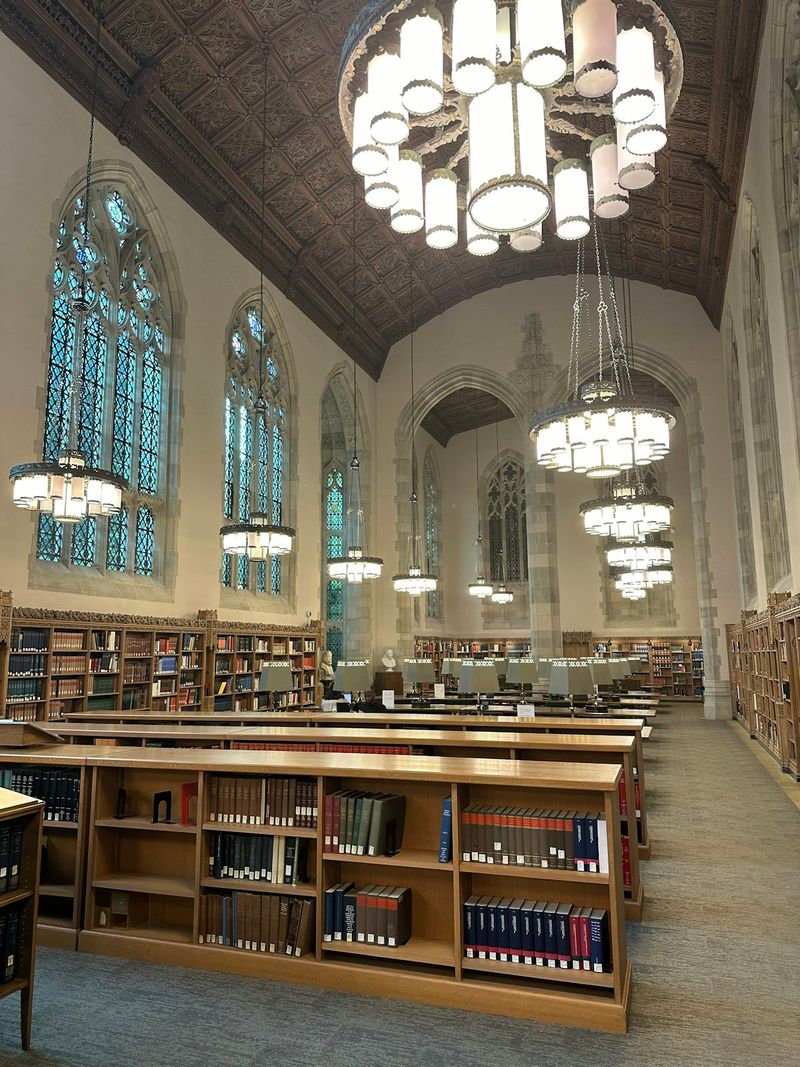
Writing Sample from Yale Divinity Application
The complete writing sample from a successful Yale Divinity School M.Div. application, drafted from scratch after seven years out of school.
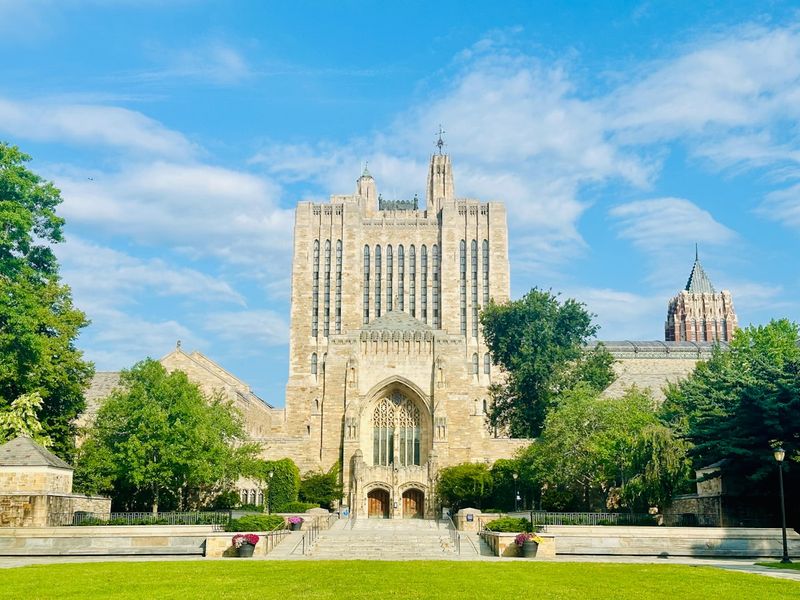
Is Yale Divinity School Worth It?
Is Yale Divinity School worth the cost, time, and challenge? An M.Div. graduate evaluates the academics, community, career outcomes, and spiritual formation at YDS.
Stay Informed
Get new writing on faith, law, and service delivered to your inbox.
No spam. Unsubscribe anytime.